Large kitchens: how do you furnish a spacious kitchen?
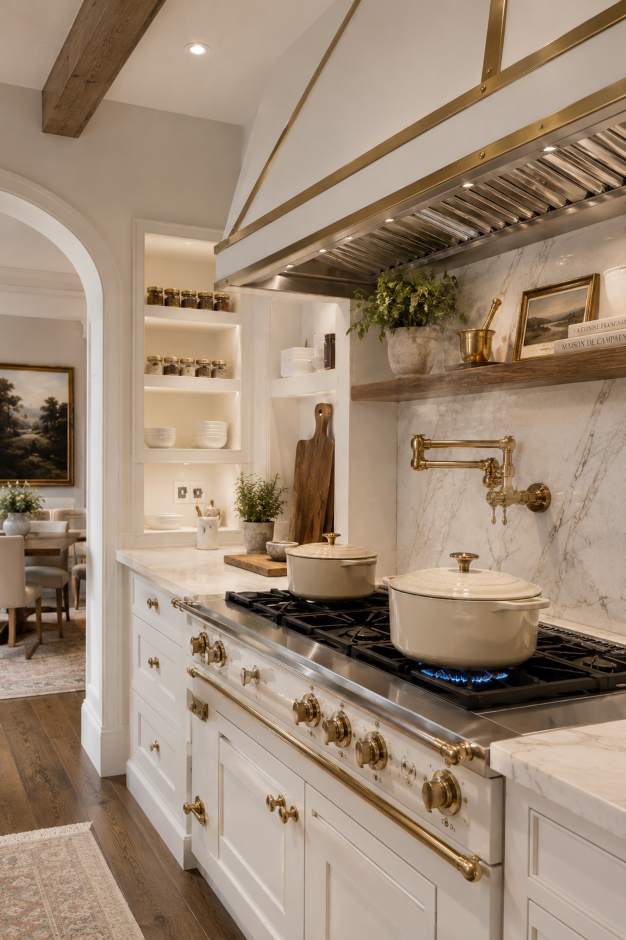
Large kitchens have always held a certain appeal. Why? Well, because they offer design freedom, because they allow for the use of high-quality materials, and because they enable a more fluid use of space compared to smaller rooms.
However, there is a rather widespread misconception. What is it? People think that a large kitchen is automatically easy to furnish. In reality, the opposite is true. The larger the space, the greater the risk of creating rooms that feel disjointed and unbalanced. Or you risk creating rooms that look spectacular but are uncomfortable to live in.
So what’s the solution? A well-designed large kitchen isn’t just about looking good. It has to actually work in everyday life. This means that the layout must be intuitive, the proportions correct, and every element must, as far as possible, harmonise with the rest of the home.
Whether it’s a contemporary open-plan space or a separate room, the design must strike the right balance between elegance, practicality and comfort. This is precisely where the difference lies between a kitchen that is simply large and one designed by a professional interior designer.
The right layout changes the perception of space, even in a large kitchen!
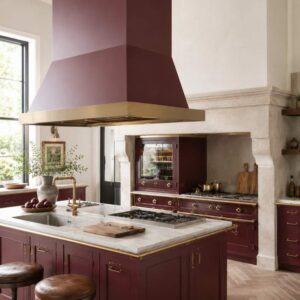
In large kitchens, the layout is the first crucial decision. The available space allows for many configurations, but not all work equally well. A linear layout, for example, can be ineffective if the room is very large. The risk is creating routes that are too long and leaving empty areas, which give a cold, uninviting feel. For this reason, in large kitchens, central islands , peninsulas or even corner layouts are often used.
The island is one of the most popular solutions because it helps to organise the flow of movement more effectively. It can serve as a worktop, a snack area or a social space. Furthermore, it ‘breaks up’ the space visually and helps to make it more balanced. However, its dimensions must be proportionate to the room. In fact, an island that is too small in a large kitchen looks out of proportion. Conversely, one that is too large risks hindering movement.
Distances also matter a great deal. There must be comfortable passageways between the island and the base units, especially when the kitchen is used by several people at the same time.
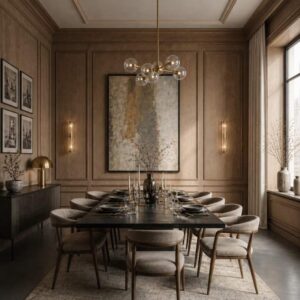
The same applies to the dining table. Fitting it in without carefully considering the space requirements leads to rooms that lack harmony. It is understandable: large kitchens must allow for natural movement. If every step becomes a long or awkward one, the space ceases to be an asset.
There is also another aspect to consider. In spacious rooms, empty space plays an important role. Consequently, filling everything with furniture and accessories is almost always a mistake. Open spaces serve to give the design breathing room and to highlight the main elements of the layout.
Materials and finishes: in large kitchens, every detail carries more weight
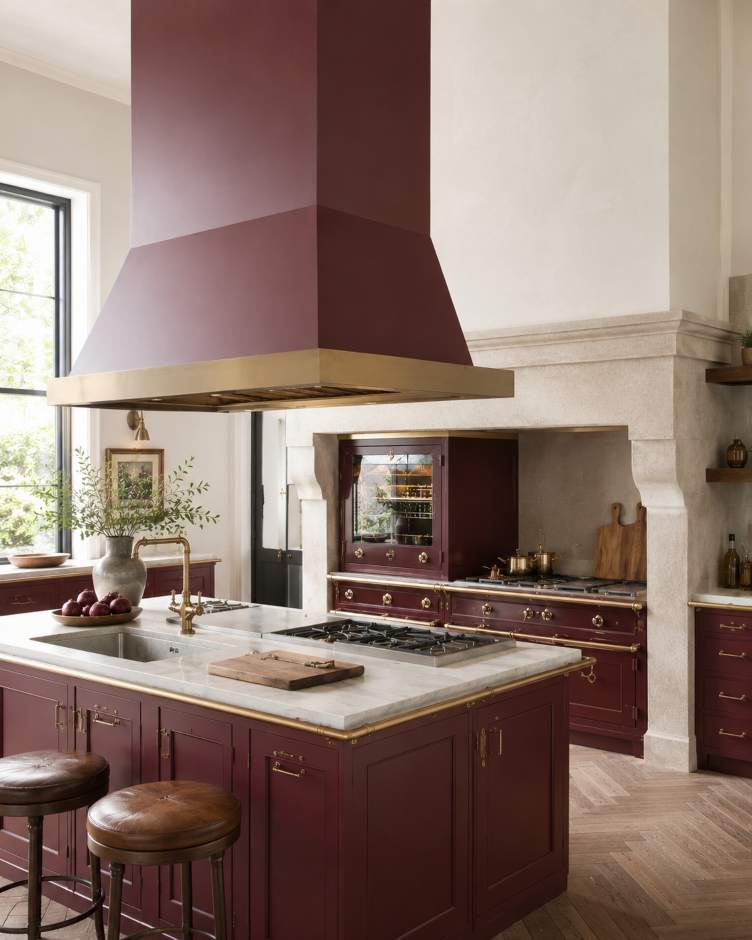
In large kitchens, materials take on even greater importance than in smaller spaces. This is because the surfaces are more extensive and the visual impact of the finishes becomes immediately apparent. For this reason, it is best to avoid random or overly bold combinations. A few well-chosen materials almost always work better than overly elaborate combinations.
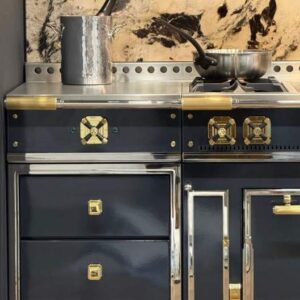
Wood remains one of the most popular elements, as it manages to make even large spaces feel more welcoming. In particular, natural woods help to balance the clean lines of contemporary kitchens and introduce a sense of warmth that is sometimes lacking in overly minimalist spaces. Alongside wood, marble, stone, stoneware and technical metals find their place, especially when aiming for a sophisticated look.
Colour also affects the perception of space. In large kitchens, dark shades can be used without making the room feel heavy, but balance is key. For example, an excessive use of very deep colours can make the room feel less bright and less welcoming. Conversely, a palette that is too light risks making everything look flat. What to do, then? Well, the best solution is generally to create controlled contrasts between materials, volumes and surfaces.
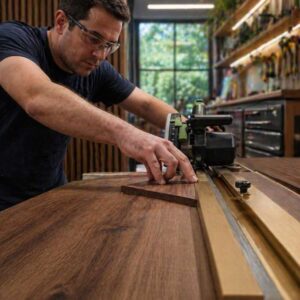
Matt finishes are highly popular, as they convey elegance and a contemporary feel. Glossy finishes, on the other hand, amplify the light and enhance the sense of dynamism. If you’re wondering, there is no single ‘correct’ choice. The decision depends on the home’s architecture, the natural light and the character you wish to give the space. In a large kitchen, however, the quality of the craftsmanship is immediately apparent. And it is precisely in the details that you can tell the difference between an ordinary design and one of a higher standard.
Comfort and atmosphere make all the difference!
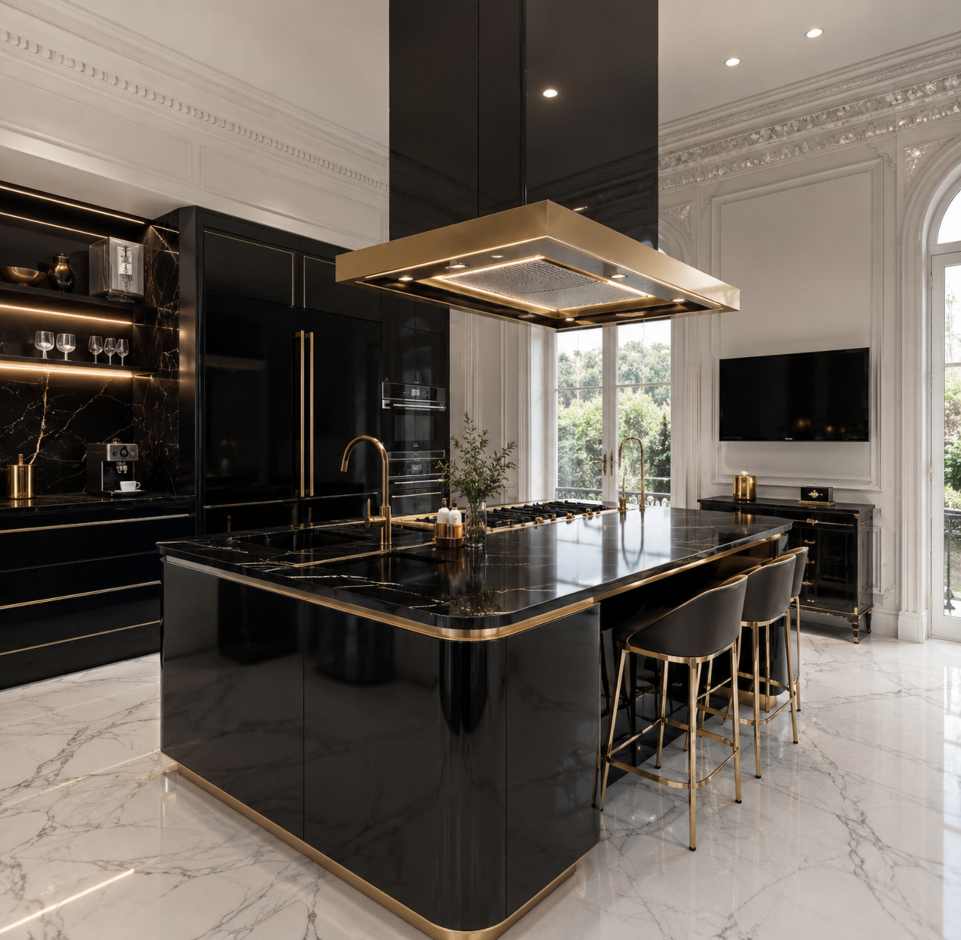
Many large kitchens are a sight to behold, but not particularly pleasant to live in. This happens when the design focuses solely on aesthetic impact, neglecting everyday life. In reality, a kitchen must first and foremost be functional. You need to understand how it will be used, how many people will use it and what habits it will need to accommodate.
In some cases, the kitchen becomes the hub of domestic socialising. In others, it retains a more ‘technical’ and private function. These are fundamental differences, as they influence decisions regarding the layout of the space. For example, a family that uses the kitchen frequently will have different needs to those who only use it occasionally. This is another reason why there is no one-size-fits-all solution.
Lighting plays an equally central role. In large spaces, a single light source is almost never enough. A well-thought-out design is needed, capable of illuminating both the working areas and those dedicated to socialising effectively. Light helps create atmosphere, enhances materials and alters the perception of space more than you might think!
Finally, the relationship between the kitchen and the rest of the house matters greatly. In contemporary open-plan spaces, for example, large kitchens must interact naturally with the living area. Materials, colours and proportions must create continuity, avoiding overly abrupt breaks. When this balance is achieved, the kitchen ceases to be merely a functional space and becomes one of the most representative areas of the entire home.
Choose a top-notch woodworking shop.
We have over 50 years of experience!
Contact us!
Il Piccolo, second generation family-run carpentry shop, opens its showroom in Lugano. With over 50 years of experience, Il Piccolo brings with it a wealth of technical and design knowledge of the highest level, thanks to the many interiors designed and furnished all over the world. In addition, Il Piccolo represents the most prestigious brands of furniture worldwide. Il Piccolo designs, manufactures and sells the best of interior design made in Italy, following the customer from design to implementation, delivery and installation of the work, integrating the process with a precise and professional service. CONTACT US