Store fixtures: why do individual display elements make all the difference?
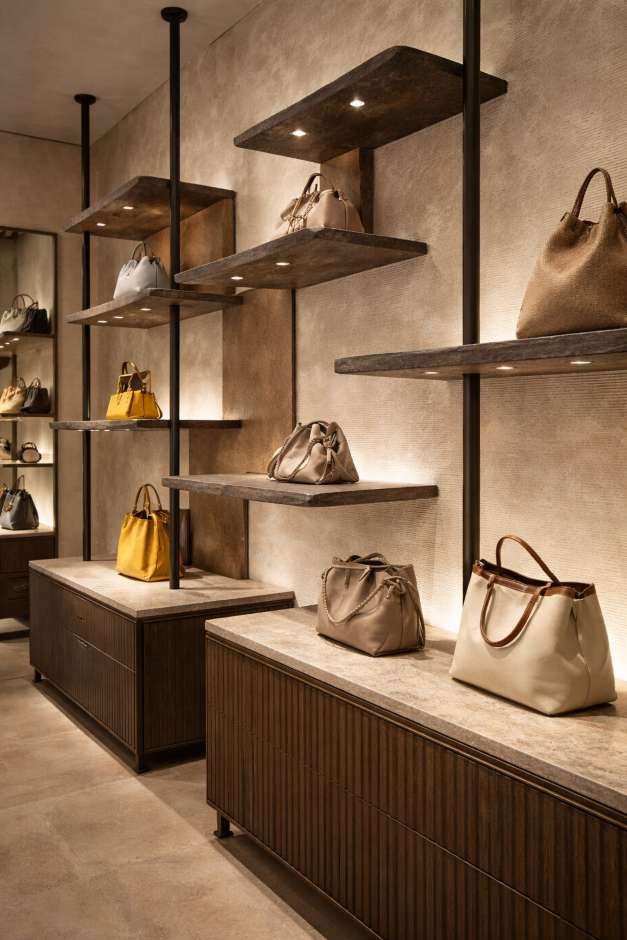
When it comes to Store fixtures, many people immediately think of the overall design: layout, customer flow, lighting , materials, checkout, backroom, etc. All true. Yet, in practice, it is often the individual display elements that determine whether a space sells well or not.
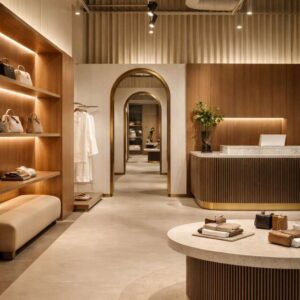
In fact, a display stand, a display cabinet, a display table or a fitted shelf are more than just simple supports. They are effective sales tools, because they guide the eye, give rhythm to the environment and convey the value of the goods on display. And all this even before the staff step in!
In high-end retail, this aspect carries even greater weight, because the customer is not just looking for goods. This target clientele seeks a sense of order, quality and control.
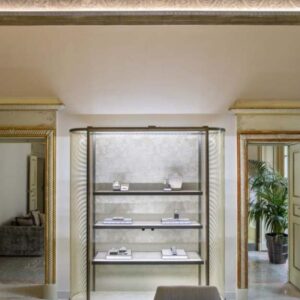
For this reason, Store fixtures should never be treated as a list of items to purchase. Instead, every single display element must be conceived and created with the product, the brand and people’s behaviour within the space in mind. For example, a small object requires space, light and protection. On the other hand, a fashion item demands visual freedom. Conversely, a premium accessory needs a setting that sets it apart, without, however, detracting from it.
The rule, ultimately, is simple: a display unit must not compete with what it showcases, but rather make it more accessible, more desirable and easier to choose. In a well-designed interior, individual pieces of furniture almost disappear from view, yet leave a clear impression: the product seems more important and the space more authoritative.
The importance of the individual display stand as a sales lever in Store fixtures
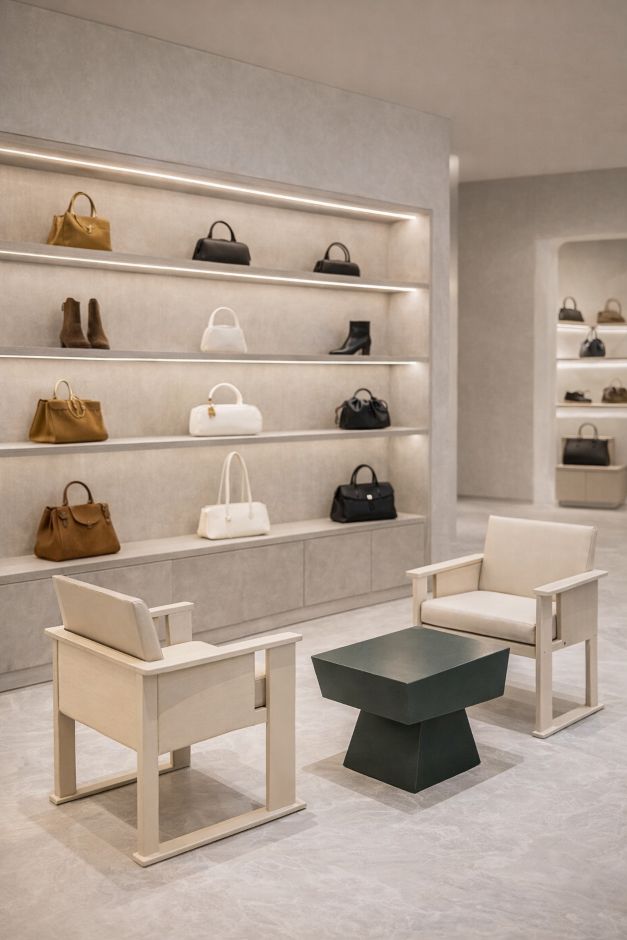
A good display stand does not merely serve to showcase a product. It also serves to give it a hierarchy.
So what? In well-designed shops, the customer’s eye is guided with precision: first they see the focal point, then they explore the surrounding elements, and finally they approach to touch or ask for information. This means that every display unit must have a clear function. A central table creates impact. A closed display cabinet emphasises protection and exclusivity. A low unit promotes an overview. A vertical element helps to create depth and rhythm.
If these Store fixtures are poorly made, the space becomes confusing. If, on the other hand, they are skilfully crafted, the shop appears tidier, richer and more credible. And, more importantly, ideal fittings make it easier to view the product range, even for first-time visitors.
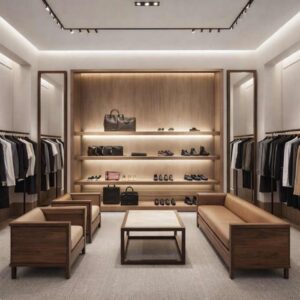
In the luxury sector, consistency matters just as much as beauty. Consequently, finishes, proportions and materials must speak the same language as the product on display. This is where warm woods, crafted metals, clear glass, technical fabrics or leather can completely alter the perception of the same object.
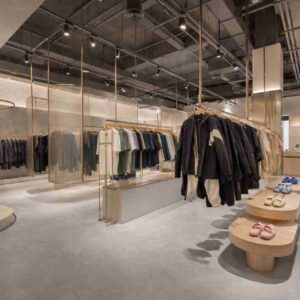
The distance between one display unit and another also makes a significant difference. A few examples? If too close together, the units compete for attention; if too far apart, the space loses its tension. The best result is achieved when every element has a specific role and nothing is left to chance. This is how a shop ceases to be a mere container and becomes a narrative.
Materials, proportions and light: the part you don’t see straight away
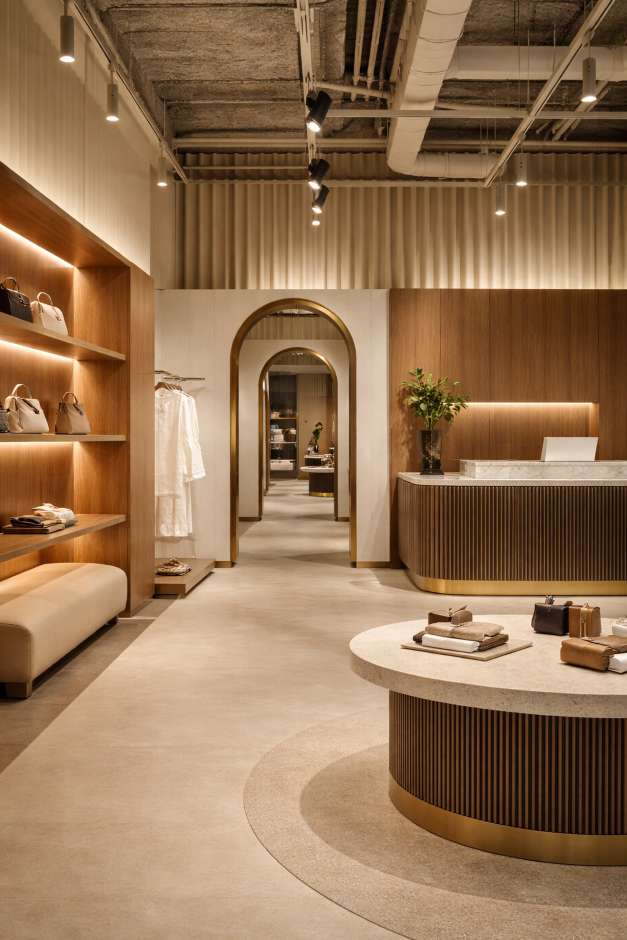
Often, those tasked with purchasing Store fixtures look first and foremost at aesthetics. That’s natural. But a serious design starts with less obvious considerations. The first is proportion. For example, a display unit that’s too bulky overwhelms the product it contains. One that’s too flimsy, on the other hand, conveys fragility or impermanence.
The second thing that matters is ‘legibility’. What does that mean? The customer must immediately understand where to look, how to approach the display, and where the product they’re interested in is located.
The third is maintenance. A display unit that is attractive but difficult to clean (or move) creates daily problems and, in the long run, loses its value. Staff needs matter too: if the unit is awkward to restock, sooner or later the problem will surface and become apparent in the shop.
Lighting is another crucial factor. A single well-lit display unit can transform its contents into something even more beautiful and valuable. Conversely, the wrong lighting flattens everything. A balance is therefore needed: enough intensity to highlight the details, but not so much as to create annoying reflections or a cold, clinical effect.
When it comes to Store fixtures, shadow also plays a role. Indeed, because it helps to create depth. In high-end shops, the role of the fittings is precisely this: to create a discreet, elegant and functional setting. The customer must not perceive any effort. They must perceive naturalness. And naturalness, in retail, is almost always the result of meticulous work.
When is it worth opting for bespoke fittings?
In Store fixtures, display elements work best when the shop offers curated collections, iconic pieces or product categories that deserve bespoke treatment.
In such cases, standard displays are insufficient. Why? You need a display built around the product, not the other way round. It is the most effective solution even when the brand wants to stand out, because the individual display element becomes a recognisable feature.
A bespoke structure , therefore, can be adapted to the size of the item, its perceived value and the type of interaction required. There is a big difference, for example, between a display unit designed to be viewed from a distance and one created to encourage close-up interaction. In the higher-end segments, this distinction is not a mere detail: it is an integral part of the shopping experience.
There is also a practical advantage, which is unfortunately underestimated. Bespoke Store fixtures allow for better management of flexibility. What do we mean by this? Well, if the product changes, if the season changes, if the layout needs updating, a well-designed system adapts without losing its identity. This is fundamental in the contract sector, where timing, durability and operational control are key.
In conclusion, the real investment in Store fixtures is not buying attractive furniture. It is equipping oneself with tools that support sales, protect the displayed product and convey a higher level of care to the customer. In quality retail, this is where the difference lies between a passable display and one that is, instead, memorable.
Choose a top-notch woodworking shop.
We have over 50 years of experience!
Contact us!
Il Piccolo, second generation family-run carpentry shop, opens its showroom in Lugano. With over 50 years of experience, Il Piccolo brings with it a wealth of technical and design knowledge of the highest level, thanks to the many interiors designed and furnished all over the world. In addition, Il Piccolo represents the most prestigious brands of furniture worldwide. Il Piccolo designs, manufactures and sells the best of interior design made in Italy, following the customer from design to implementation, delivery and installation of the work, integrating the process with a precise and professional service. CONTACT US